Tankless water heaters provide hot water on demand rather than maintaining a reservoir of heated water around the clock. For Niceville homeowners, this technology offers advantages worth considering, particularly given the coastal climate’s impact on conventional water heating equipment. Salt air exposure, humidity levels, and space constraints in coastal properties make tankless systems an attractive option for many households. However, these units require different installation approaches and come with distinct cost considerations compared to traditional models.
Gulfshore Air Conditioning & Heating Inc. has served Niceville and surrounding communities for over 25 years, helping homeowners evaluate whether water heater installation in Niceville aligns with their household needs and property characteristics. This guide examines how tankless systems function, their benefits and limitations for local conditions, installation requirements, cost factors, and selection criteria to help you make an informed decision.
How Tankless Water Heaters Differ from Traditional Tank Systems
Tankless water heaters heat water directly without using a storage tank. When you turn on a hot water tap, cold water travels through a pipe into the unit, where either a gas burner or an electric element heats the water instantly. This on-demand approach eliminates the standby energy losses associated with traditional storage water heaters.
Traditional tank systems store 30 to 80 gallons of hot water, ready for immediate use but subject to heat loss through tank walls. Tankless units produce hot water at a rate of 2 to 5 gallons per minute, depending on the model and fuel source. Gas-fired models typically produce higher flow rates than electric versions.
| System Feature | Traditional Tank | Tankless |
| Average Lifespan | 8-12 years (gas), 10-15 years (electric) | 15-20+ years |
| Space Required | 3-5 square feet floor space | Wall-mounted, minimal space |
| Energy Efficiency | 60-70% | 80-99% |
| Recovery Time | 30-60 minutes | Continuous |
According to the U.S. Department of Energy, for homes that use 41 gallons or less of hot water daily, demand water heaters can be 24% to 34% more energy efficient than conventional storage tank water heaters. They can be 8% to 14% more energy efficient for homes that use around 86 gallons per day.
In Niceville’s coastal environment, traditional tank systems face additional challenges. Humid conditions accelerate corrosion on tank exteriors and connections, potentially shortening equipment lifespan. Salt air can compromise tank integrity and metal components faster than in inland locations. A qualified heating contractor in Niceville, FL, can assess these environmental factors when recommending water heating solutions for your property: the same professional approach heating contractors in Niceville, FL, apply when evaluating furnace and heat pump systems for coastal durability.
Benefits of Tankless Water Heaters for Niceville Homes
Tankless water heaters offer several advantages that align well with coastal Florida living. Energy savings represent a substantial benefit, while the continuous hot water supply eliminates the frustration of running out during back-to-back showers or when running multiple appliances.
Key Advantages for Coastal Properties
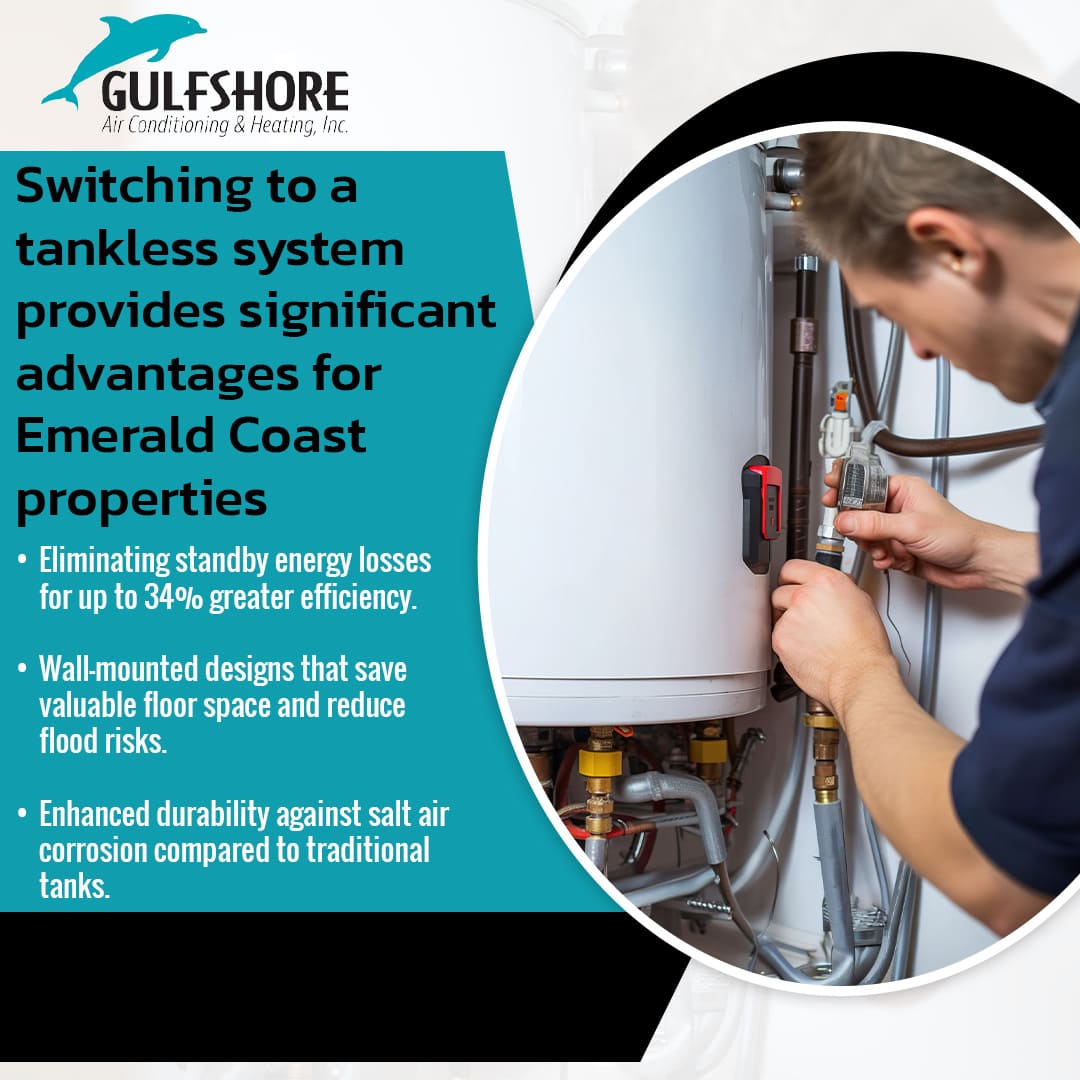
- Eliminates Flood Risk: Without 40 to 50 gallons of water sitting in a tank, the risk of catastrophic flooding from tank failure disappears, particularly valuable for homeowners who travel frequently or maintain vacation properties.
- Reduces Indoor Humidity: Tank systems contribute to moisture problems and create conditions favorable to mold growth in utility closets or garage installations common in Florida homes. Modern tankless units minimize these concerns with sealed combustion designs.
- Space Savings: Wall-mounted installation reclaims valuable floor space in garages, utility rooms, or closets where traditional tanks typically sit.
- Continuous Hot Water Supply: Multiple showers, dishwasher cycles, and laundry loads can run simultaneously without depleting hot water reserves.
Important Considerations Before Installation:
The upfront cost typically runs higher than traditional tank replacement. Many homes require electrical system upgrades to support electric tankless models or gas line modifications for gas-powered units. These infrastructure changes add to project costs but remain necessary for safe, code-compliant operation.
Flow rate limitations can affect homes with simultaneous high-demand hot water use. If someone is showering while the dishwasher and washing machine run on hot water cycles, the tankless unit may struggle to maintain consistent temperatures at all fixtures.
In North Florida, groundwater temperatures typically average around 70°F according to the Suwannee River Water Management District, which means tankless units need to raise water temperature by approximately 45 to 50 degrees to reach standard 120°F hot water delivery. This temperature rise calculation affects system sizing and performance expectations.
Niceville’s relatively hard water requires more frequent maintenance for tankless systems. Mineral buildup can reduce efficiency and damage heating elements if not addressed through regular descaling service. A plumber in Niceville familiar with local water conditions can recommend appropriate maintenance schedules and water treatment options, similar to how heater repair in Niceville, FL, involves preventive maintenance to extend equipment life.
Gulfshore Air Conditioning & Heating Inc. has installed tankless water heating systems throughout coastal properties in the Niceville area, helping homeowners navigate these considerations based on their specific household patterns and property characteristics.
Professional Water Heater Installation: What Niceville Homeowners Should Expect
Tankless water heater installation involves several technical requirements different from traditional tank replacement. The process begins with a thorough assessment of your home’s existing infrastructure, hot water demand patterns, and optimal location for the new unit.
Infrastructure Requirements
Electric tankless models typically require 240-volt circuits with substantial amperage, sometimes necessitating electrical panel upgrades if your current system lacks capacity. Gas tankless units may need larger gas lines than conventional systems used, particularly for high-flow models. Adequate venting must also be addressed, with requirements varying by unit type and local building codes.
The Installation Process
- Site Preparation: The installation team evaluates electrical capacity, gas line size (if applicable), water pressure, venting options, and mounting location to identify any modifications needed.
- Utility Modifications: Electricians upgrade circuits and panels as needed, or gas line installers increase pipe diameter if required, before the water heater installation begins.
- Old System Removal: The existing water heater is drained, disconnected from utilities and water lines, and removed from the property with proper disposal.
- New Unit Installation: Technicians mount the tankless unit on the wall, connect it to water supply lines with appropriate shut-off valves, and establish utility connections according to manufacturer specifications and local codes.
- Venting and Testing: Proper venting gets installed to safely remove combustion gases (for gas models), condensate drain lines are connected, and the unit is tested for leaks and proper function.
Niceville homeowners should expect installation to take a full day or potentially longer if substantial electrical or gas line work is required. Local permit requirements apply to water heater installation in Niceville, with inspections verifying code compliance. Licensed contractors handle permit acquisition and coordinate inspection scheduling.
The importance of professional installation cannot be overstated. Improperly sized gas lines can create dangerous conditions. Incorrect electrical connections risk fire hazards. Inadequate venting exposes occupants to combustion gases. These risks make DIY installation inadvisable, and warranty coverage typically requires professional installation by licensed contractors.
Factory-trained technicians from Gulfshore Air Conditioning & Heating Inc. understand the specific requirements for tankless installation in coastal environments, including corrosion-resistant materials selection, proper sealing against salt air exposure, and compliance with Florida building codes.
Cost Analysis: Investment and Long-Term Value
Financial considerations for tankless water heaters extend beyond purchase price to include installation costs, operating expenses, maintenance requirements, and equipment lifespan. Understanding this complete picture helps homeowners make decisions based on the total cost of ownership.
Initial investment for tankless systems typically exceeds that of traditional tank replacement. Units themselves cost more, and installation complexity adds labor expenses, particularly when electrical upgrades or gas line modifications are necessary. However, these upfront costs should be weighed against long-term operating expenses and equipment longevity.
Key Cost Factors
- Unit Selection: Gas models generally cost more than electric units, though they provide higher flow rates. Condensing gas models carry premium prices but offer maximum long-term energy savings.
- Fuel Source Changes: Converting from electric to gas, or vice versa, requires additional infrastructure work and increases project costs.
- Electrical System Capacity: Homes with older electrical panels may need upgrades to support electric tankless models, adding substantial costs.
- Permit and Inspection Fees: Local jurisdiction fees apply to water heating system installations and vary by location.
| Cost Factor | Traditional Tank | Tankless System |
| Equipment Expected Lifespan | 8-12 years (gas), 10-15 years (electric) | 15-20+ years |
| Annual Energy Savings vs. Standard Tank | Baseline | 8-34% reduction |
| Replacement Frequency (20 years) | 1-2 replacements needed | 0 replacements needed |
| Annual Maintenance Requirement | Tank flush ($80-120) | Descaling service ($150-200) |
Various rebate programs and incentives may be available for high-efficiency tankless water heaters. Homeowners should research current federal tax credits, utility company rebates, and local incentive programs when calculating net investment costs.
When deciding between heater repair in Niceville, FL, and replacing your aging traditional tank, consider that a tankless system can eliminate the need for replacement costs for decades. If you’re already addressing furnace repair or heat pump repair in Niceville, FL, coordinating these upgrades creates scheduling and cost efficiencies. The coastal factors affecting all heating equipment, such as, salt air, humidity, and corrosion, make professional installation particularly important.
Gulfshore Air Conditioning & Heating Inc. provides free estimates for tankless installations, helping Niceville homeowners understand their specific costs based on home conditions and selected equipment. We also offer financing options to make high-efficiency water heating accessible regardless of immediate budget constraints.
Choosing the Right Tankless Water Heater and Plumber in Niceville
Selecting an appropriate tankless water heater requires matching system capacity to household hot water demand while considering fuel availability, space constraints, and budget parameters. The sizing process differs from traditional tank selection, focusing on flow rate requirements rather than storage volume.
Calculating Your Hot Water Needs
Flow rate calculations begin by identifying the maximum hot water demand your household might experience simultaneously. Each fixture has a specific flow rate measured in gallons per minute (GPM):
- Showers: 2.0-2.5 GPM
- Bathroom faucets: 0.5-1.5 GPM
- Kitchen faucets: 3-7 GPM
- Dishwashers: 1-2.5 GPM
Sum the flow rates for simultaneous use scenarios to determine the minimum capacity your tankless unit must provide. Temperature rise calculation also affects sizing, the difference between the incoming cold water temperature and the desired hot water output temperature. Gas tankless models handle larger temperature rises more effectively than electric units.
Fuel Type Selection
Natural gas tankless water heaters provide the highest flow rates and work well for larger households with significant simultaneous hot water demand. Propane models offer similar performance for homes without natural gas service. Electric tankless units suit smaller households with lower flow requirements and homes where gas service is unavailable or prohibitively expensive to install.
Key Decision Factors
- Household Size: Larger families or homes with multiple bathrooms benefit from higher-capacity gas models. Smaller households may find electric units sufficient and more economical.
- Available Utilities: Existing gas service simplifies gas unit installation. Homes with electric service only may face high costs to add gas capability.
- Space Availability: Wall-mounted tankless units fit in smaller spaces than traditional tanks, but gas models require more clearance for venting.
- Budget Considerations: Balance initial investment against long-term savings. Higher-efficiency models cost more upfront but deliver greater lifetime savings.
Finding the Right Contractor
When evaluating contractors for water heater installation in Niceville, verify licensing, insurance coverage, and manufacturer certifications. Ask about experience with tankless systems specifically, not just traditional water heaters. Request references from recent tankless installations in coastal properties similar to yours. Confirm that quoted prices include all necessary permits, inspections, and utility modifications.
A qualified plumber in Niceville should assess your home’s specific conditions before recommending a system. This evaluation identifies potential complications, determines whether your home can support tankless installation without major modifications, and provides accurate cost projections. Avoid contractors offering quotes without seeing your property—proper assessment requires an in-person evaluation of utility infrastructure and installation location.
Gulfshore Air’s NATE-certified technicians bring specialized training in tankless water heater technology to every installation. As an authorized dealer for major manufacturers, we offer factory-backed warranties and access to the full range of residential and commercial tankless models. Our 25-plus years of experience serving Niceville and surrounding coastal communities means we understand the specific challenges salt air, humidity, and local water conditions create for water heating systems.
Get Professional Guidance for Your Tankless Water Heater Decision
Tankless water heaters offer Niceville homeowners energy efficiency, space savings, continuous hot water supply, and extended equipment lifespan compared to traditional tank systems. However, they require careful evaluation of household hot water patterns, infrastructure requirements, and upfront investment to determine whether they suit your specific situation. The coastal environment adds considerations around corrosion resistance, hurricane preparedness, and maintenance needs that professional contractors familiar with local conditions can best address.
Whether you’re replacing a failed traditional water heater, planning a home renovation, or seeking ways to reduce energy costs and improve efficiency, tankless technology deserves serious consideration. The right system, properly installed and maintained, can provide decades of reliable hot water service while lowering your utility bills and freeing up valuable space in your home.
Gulfshore Air Conditioning & Heating Inc. offers free consultations to help Niceville-area homeowners evaluate their water heating options. Our factory-trained, NATE-certified technicians assess your home’s infrastructure, calculate your hot water demand, and recommend solutions that match your needs and budget. We provide transparent estimates covering all aspects of installation, from equipment and labor to permits and necessary modifications. With same-day service availability and 25 years of experience serving Niceville, Destin, Fort Walton Beach, and surrounding communities, we deliver the professional installation quality that tankless systems require.
Call us at (850) 897-6540 or visit our Contact page to schedule your free tankless water heater consultation. Let our experienced team help you determine whether tankless technology is the right choice for your home, and if so, which system best meets your household’s hot water needs.