Understanding Your Home’s Unique Air Quality Challenges
Homeowners in Niceville and surrounding coastal communities face distinct challenges when it comes to maintaining healthy indoor environments. The proximity to the Gulf of Mexico introduces factors that standard HVAC systems and air filtration approaches simply weren’t designed to handle. Salt-laden air, elevated moisture levels, and marine particulates create conditions that accelerate equipment deterioration while simultaneously introducing contaminants that inland properties rarely encounter.
Gulfshore Air Conditioning & Heating Inc. has spent over 25 years addressing these region-specific challenges throughout Northwest Florida’s Emerald Coast. What works effectively for homes in Orlando or Tallahassee often proves inadequate for properties within 10 miles of saltwater. Understanding these differences is the first step toward creating a healthier indoor environment that protects both your family’s respiratory health and your HVAC investment.
This article examines the science behind coastal air quality challenges, identifies warning signs that your current approach may be failing, and outlines solutions specifically engineered for Niceville’s unique climate. Whether you’re experiencing persistent allergy symptoms, noticing unusual system behavior, or simply want to protect your home proactively, recognizing the difference between inland and coastal indoor air quality solutions will help you make ideal decisions.
How Salt Air and Coastal Humidity Create Unique Indoor Air Quality Challenges
The Gulf of Mexico’s influence extends far beyond beautiful beaches. Salt particles suspended in marine air travel inland with prevailing winds, affecting homes up to 10 miles from the shoreline. This invisible threat creates cascading problems for residential HVAC systems and indoor air quality in Niceville.
The Salt Air Factor
Salt aerosols carried by Gulf breezes settle on every surface your HVAC system touches:
- Ductwork and ventilation pathways where air circulates throughout your home
- Evaporator and condenser coils responsible for heat transfer and cooling
- Fan blades and motors that drive airflow through the system
- Air filtration media designed to capture airborne contaminants
Unlike dust or pollen, salt actively promotes corrosion through electrochemical reactions accelerated by humidity. Properties within 5 miles of the coast experience the most aggressive salt exposure, with standard air filters becoming compromised more quickly than manufacturers’ typical replacement schedules anticipate.
Humidity Beyond Normal Florida Levels
While all of Florida contends with moisture, coastal areas experience persistently higher humidity levels. Florida Climate Center notes that coastal areas are a little more humid than inland areas of central Florida and the Panhandle due to the warm water bodies and the afternoon seabreeze, creating environments where residential HVAC systems must work harder to maintain comfortable conditions.
| Environmental Factor | Coastal Impact | HVAC Consequence |
| Elevated baseline humidity | Sustained moisture above inland averages | Increased condensation inside equipment |
| Marine air influence | Salt-laden moisture from Gulf waters | Accelerated corrosion on metal components |
| Temperature moderation | Smaller day/night temperature swings | Extended AC runtime with reduced dehumidification |
| Persistent coastal fog | Evening moisture accumulation | Water intrusion into outdoor units |
This persistent moisture creates ideal conditions where mold and mildew thrive inside ductwork, air handlers, and on coil surfaces. Your HVAC air purification system must work harder to address these moisture-related challenges while simultaneously filtering salt-laden air.
Three IAQ Problems Coastal Homes Face That Inland Properties Don’t
The combination of salt air and elevated moisture creates specific problems that homeowners 50 miles inland rarely encounter. Recognizing these coastal-specific issues helps you understand why standard indoor air quality service approaches often fall short in Niceville.
Problem 1: Accelerated Mold and Mildew Growth in HVAC Systems
According to the EPA, indoor relative humidity (RH) should be kept below 60 percent — ideally between 30 percent and 50 percent, if possible. Yet coastal properties regularly exceed this threshold even with properly functioning air conditioning, creating conditions where mold and mildew develop more rapidly than in inland homes.
Where Mold Develops in Coastal HVAC Systems:
| System Component | Why It’s Vulnerable | Warning Signs |
| Drain lines | Salt residue combines with biological matter | Clogs more than twice yearly |
| Air handler cabinets | Dark, moist environment with condensation | Musty odors when system starts |
| Evaporator coils | Persistent moisture on cold surfaces | Reduced cooling capacity |
| Ductwork joints | Hidden moisture accumulation points | Visible discoloration around vents |
When mold establishes itself inside your HVAC system, every time the blower operates, spores circulate throughout your home. This connection between biological growth and system maintenance explains why regular AC repair in Niceville, FL often includes IAQ components that in-service calls typically don’t require.
Problem 2: Salt Corrosion Compromising Air Filtration Effectiveness
Metal ductwork, evaporator coils, and condensing units all face corrosion risks that inland systems avoid entirely. As protective coatings deteriorate, rust particles and flaked metal enter your airstream, introducing contaminants that filters were never designed to capture.
The Corrosion Cascade Effect:
- Stage 1: Salt particles settle on metal surfaces throughout the HVAC system
- Stage 2: Moisture activates the electrochemical corrosion process
- Stage 3: Protective coatings break down, exposing vulnerable metal
- Stage 4: Rust develops and flakes off into the circulating air
- Stage 5: Perforations form, allowing contaminated attic air infiltration
Compromised ductwork creates secondary problems beyond contaminated air. Small perforations allow unconditioned attic air, often laden with insulation particles and biological matter, to enter your supply system. This deterioration explains why AC replacement in Niceville, FL, often includes a complete duct system evaluation and remediation.
Problem 3: Marine and Organic Particulates in Coastal Air
Beyond salt and moisture, coastal air carries unique biological material that inland environments lack. Sea spray introduces algae particles, marine bacteria, and organic compounds that standard filtration media handle poorly.
Coastal-Specific Airborne Contaminants:
| Contaminant Type | Source | Why Standard Filters Fail |
| Salt aerosols | Gulf water evaporation | Particles too small for basic filtration |
| Marine organic matter | Sea spray and coastal algae | Biological material bypasses mechanical filters |
| Coastal vegetation pollen | Salt-tolerant plant species | Different size/density than inland pollen |
| Airborne sand particles | Beach erosion and wind transport | Abrasive particles damage filter media |
Standard residential filtration captures larger particles effectively but allows salt aerosols, fine sand, and biological matter to pass through. Coastal homes require filtration strategies specifically designed for these regional contaminants.
Signs Your Coastal Home’s Air Quality Needs Professional Attention
Recognizing when indoor air quality in Niceville has deteriorated helps you address problems before they affect your family’s health or damage expensive equipment.
Persistent Health Symptoms
Respiratory issues that improve when you leave home but return within hours suggest contaminated indoor air:
- Allergy symptoms that worsen despite medication or treatment
- Morning congestion that clears by mid-afternoon when away from home
- Sleep quality problems accompanied by throat irritation or coughing
- Unexplained fatigue that lifts when spending time outdoors
Reference: https://www.osha.gov/indoor-air-quality/
Visible Evidence in Your Home
| Observation | What It Indicates | Action Needed |
| Musty odors from vents | Biological growth in ductwork or air handler | Professional IAQ evaluation |
| Moisture near supply grills | Excessive humidity or condensation problems | System performance assessment |
| Dust accumulation within 48-72 hours | Filtration system not capturing particles | Filter upgrade or replacement |
| Rust/corrosion on vent covers | Salt damage to hidden components | Complete duct system inspection |
HVAC System Behavior Changes
Your HVAC system communicates problems through performance changes before complete failure. Watch for drain line clogs more than twice yearly, unusual odors when your system starts, reduced airflow from vents even with clean filters, or constant operation without reaching the set temperature. These behavioral changes indicate problems that professional indoor air quality contractors in Niceville should evaluate before they worsen.
Choosing the Right Indoor Air Quality Solutions for Niceville’s Climate
Addressing coastal air quality challenges requires solutions specifically designed for salt air and elevated humidity rather than generic approaches marketed nationwide.
Advanced Filtration Designed for Coastal Environments
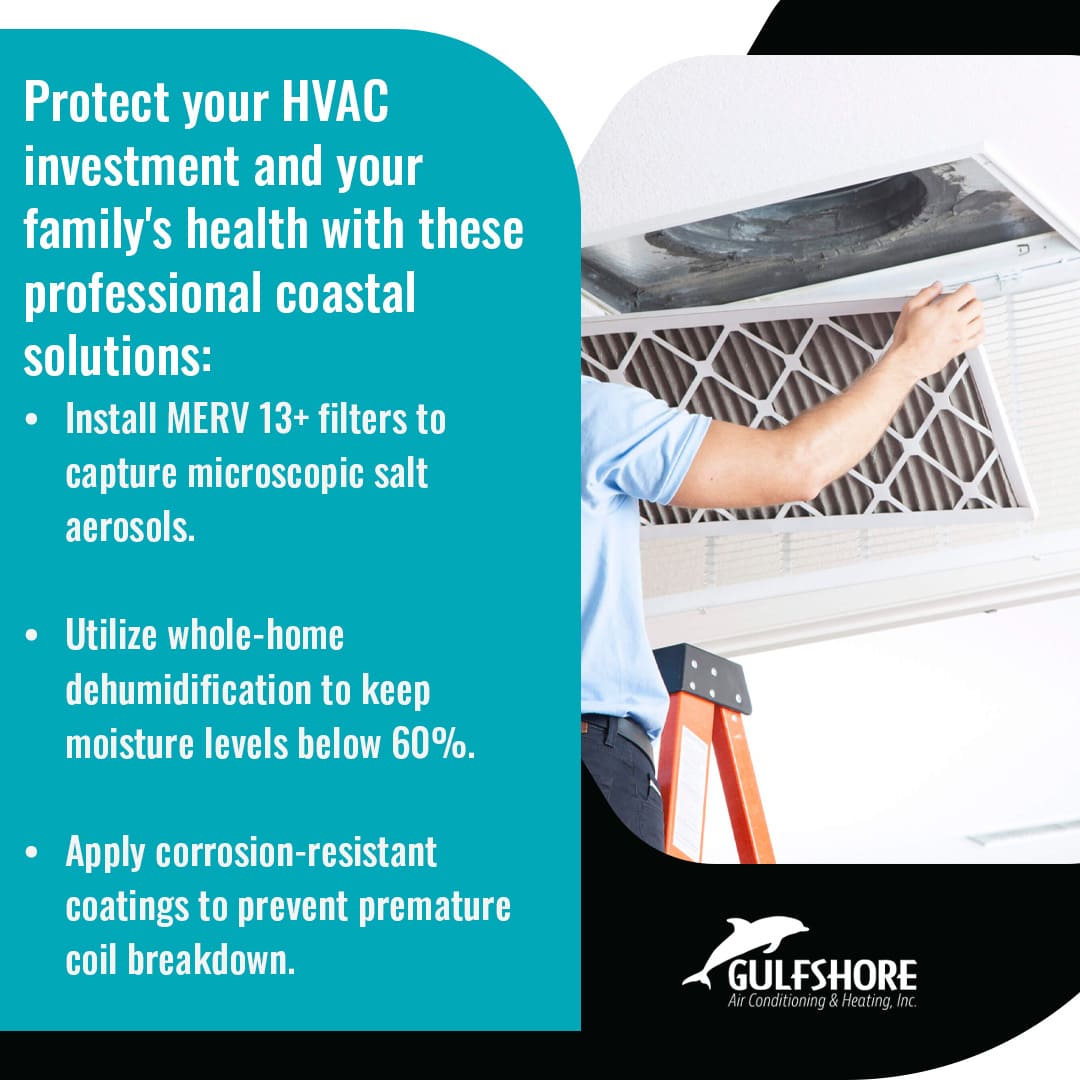
Minimum Efficiency Reporting Values, or MERVs, report an air filter’s ability to capture particles between 0.3 and 10 microns (µm), providing a standardized way to compare filter performance. If you decide to upgrade or use a higher efficiency filter, choose a filter with at least a Minimum Efficiency Reporting Value (MERV) 13 rating, or as high a rating as your system fan and filter slot can accommodate.
Understanding MERV Ratings for Coastal Applications:
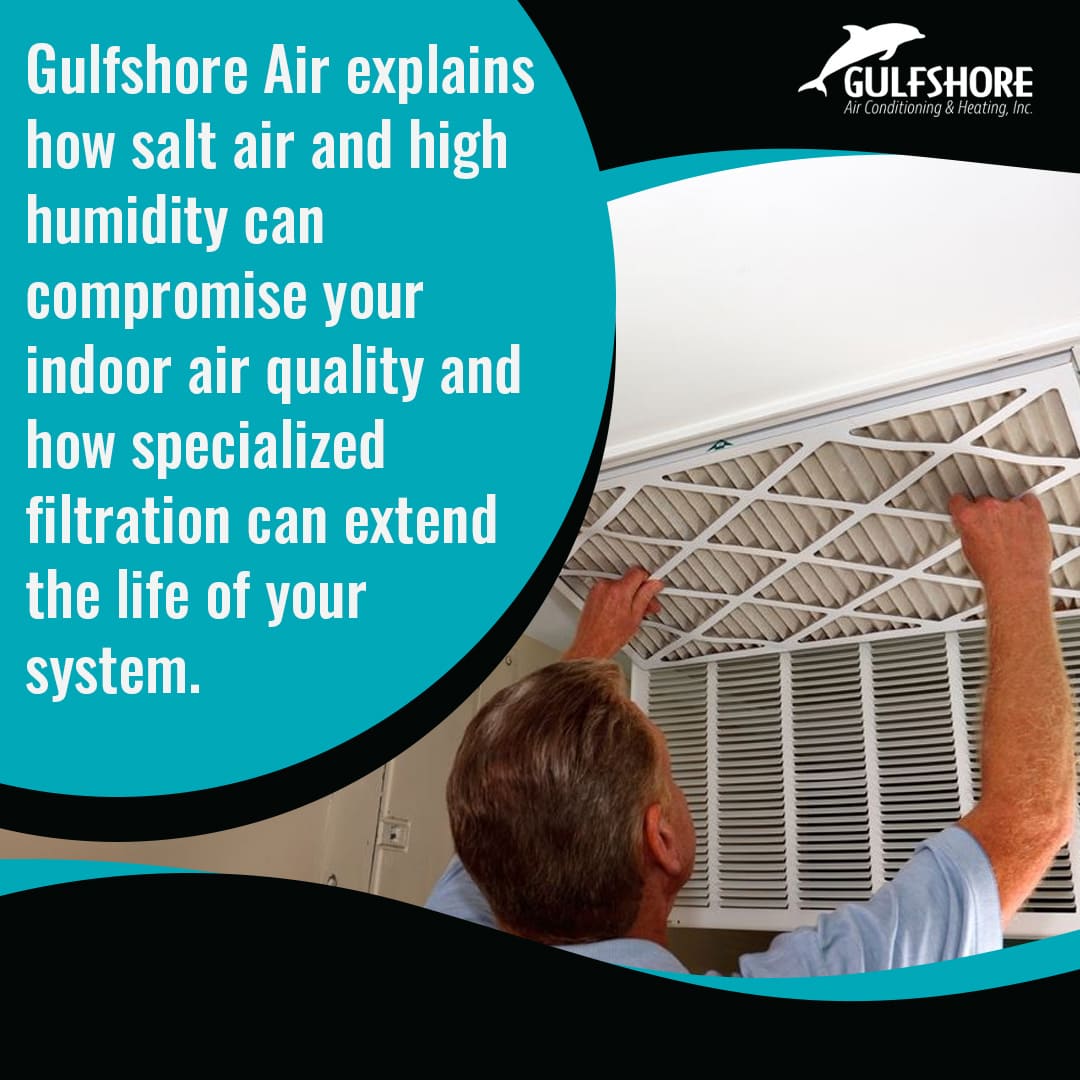
The EPA recommends MERV 13 or higher filters for capturing fine particles, which is particularly important in coastal environments where salt aerosols and marine contaminants challenge standard filtration. HVAC air purification systems designed for coastal applications benefit from higher MERV ratings that can capture the smaller particles common in salt air.
Key Considerations for Coastal Filter Selection:
- MERV 8-11 filters capture larger particles like dust and pollen, but may allow salt aerosols to pass through
- MERV 13+ filters capture finer particles, including smoke, bacteria, and salt particles
- Electrostatic or activated carbon enhancement addresses both particulate and chemical contamination
- System compatibility must be verified—consult an HVAC professional to confirm your system can handle higher MERV ratings
Filter replacement frequency requires special attention in coastal environments. While inland homes typically change filters every 90 days, coastal properties experience accelerated filter loading from salt particles, marine aerosols, and sand. Monitor your filters monthly and replace them when they appear dirty or clogged, as coastal conditions often require more frequent changes than manufacturer recommendations suggest.
Humidity Control Beyond Standard Dehumidification
Coastal homes require humidity management that standard air conditioning alone cannot provide. While AC operation removes some moisture as a byproduct of cooling, the elevated baseline humidity in coastal areas means standalone dehumidification often becomes necessary to maintain the 30-50% relative humidity range recommended by the EPA.
Whole-home dehumidification systems integrate with existing HVAC equipment, running independently when cooling isn’t needed but humidity remains elevated. This approach is particularly valuable during mild weather when air conditioning cycles infrequently, exactly when coastal humidity tends to climb toward problematic levels. The technicians at Gulfshore Air Conditioning & heating Inc. can assess your home’s specific humidity challenges and recommend appropriately sized dehumidification solutions that work seamlessly with your existing HVAC system.
Protective Measures for HVAC Components
Salt air demands proactive protection for metal components throughout your HVAC system:
- Corrosion-resistant coatings on evaporator and condenser coils extend equipment lifespan in coastal environments
- Quarterly algaecide treatments for drain lines prevent biological and salt buildup
- Seasonal component inspections catch corrosion before failure occurs
The Gulfshore Protection Plan specifically addresses these coastal needs with biannual maintenance visits, algaecide tablet application, and a 60-day drain line guarantee that recognizes the increased failure risk coastal systems face.
How Professional IAQ Services Protect Your Coastal Investment
Attempting DIY indoor air quality solutions in coastal environments often proves counterproductive. The regional expertise and specialized equipment professional services provider delivers results that generic approaches cannot match.
The Professional Assessment Process
Thorough IAQ evaluation for coastal homes examines factors homeowners typically overlook. Ductwork inspection focuses on areas most vulnerable to salt corrosion: points, connections, and transitions where protective coatings wear thin first. Air handler cabinets receive scrutiny for biological growth that standard filter changes never address.
The difference between DIY approaches and professional indoor air quality service becomes clear when considering what the evaluation reveals. Homeowners see dirty filters and visible dust; trained technicians identify corrosion patterns, moisture infiltration points, and biological growth hidden inside equipment: problems that inexpensive solutions cannot address.
Long-Term Protection and Maintenance
Gulfshore Air Conditioning & Heating Inc. has served Northwest Florida’s coastal communities for over 25 years, developing maintenance protocols specifically designed for regional challenges. NATE-certified technicians trained in coastal conditions understand the difference between typical wear and salt-accelerated deterioration.
Cost Comparison: Proactive vs Reactive Approach
- Biannual Protection Plan: $240 annually per system
- Average emergency repair: $800-1,200 for parts and labor
- Premature system replacement: $4,000-8,000, depending on capacity
Protection Plan benefits extend beyond scheduled maintenance to include priority scheduling, 15% discount on repairs and accessories, and 5% discount on complete system upgrades.
Local Expertise Matters
Indoor air quality contractors in Niceville possess regional knowledge that companies based inland or serving broad geographic areas simply lack. Understanding how salt air affects homes requires years of local experience. Gulfshore Air Conditioning & Heating Inc.’s award recognition validates this expertise – Best of The Emerald Coast winners for 11+ consecutive years demonstrate consistent quality that customers value.
Breathe Easier in Your Coastal Home
Your family’s respiratory health and your HVAC system’s longevity both depend on addressing the unique indoor air quality in Niceville challenges that coastal living creates. Salt air, elevated humidity, and marine particulates require solutions specifically engineered for Northwest Florida rather than generic approaches designed for inland properties.
Professional IAQ evaluation identifies problems before they affect your family’s health or force expensive emergency repairs. Gulfshore Air Conditioning & Heating Inc. offers same-day service availability from 8 AM to 8 PM daily, with free, no-obligation consultations that provide an honest assessment of your home’s current conditions and clear recommendations for improvement.
Don’t wait until persistent allergy symptoms, musty odors, or visible contamination force action. Whether you need AC repair in Niceville, FL, complete system replacement, or specialized indoor air quality solutions, our factory-trained technicians bring over 25 years of coastal Florida experience to every service call.
Contact us at gulfshore@gulfshoreair.com or (850) 897-6540 to schedule your IAQ evaluation, or visit our Contact Page to learn more about comprehensive comfort solutions for Niceville, Destin, Fort Walton Beach, Santa Rosa Beach, Miramar Beach, and surrounding Emerald Coast communities. Your home deserves air quality solutions designed specifically for where you live – not generic approaches that ignore coastal realities.